
Schedule Your Visit
Fill out the appointment form and our team will contact you shortly.
Cataract Surgery Cost in Dehradun: What Determines the Price?
If you search for cataract surgery cost in Dehradun, you will find a wide spread of prices and very little explanation. That is confusing, and it can make a simple decision feel risky.
The honest answer is that there is no single price. The cost depends on the technique, the lens, the condition of your eye, and what the package includes. This guide explains each factor so you can compare options sensibly and ask the right questions.
Two people can both have cataract surgery and receive very different treatment based on cataract maturity, lens choice, and customized visual goals. If you are seeking transparent evaluation and personalized cataract surgical care in Uttarakhand, the cataract specialists at Raahi Netradham in Dehradun provide detailed pre-operative workups and customized treatment packages.
Need a Clear Estimate for Cataract Surgery? Consult Raahi Netradham
Dehradun Location | NABH Accredited | Fellowship Cataract Surgeons | Dr. Isha Agarwalla, Dr. Mohit Garg & Dr. Chintan Desai | Transparent Packages, Cashless Insurance & Modern IOL Options
Book Your Cataract Consultation in Dehradun
Get personalized surgical evaluation and comprehensive aftercare at Raahi Netradham with experienced cataract surgeons and advanced surgical technology.
Why There Is No Single Price for Cataract Surgery
Two people can both have cataract surgery and receive completely different treatment. One may have an early cataract removed with a standard monofocal lens, while another may have a very dense cataract requiring a specialized technique and an advanced toric lens for astigmatism.
The surgical complexity, operative equipment, and intraocular lens technology are different, which directly reflects in the overall cost. A quote without an eye examination is only a rough guide; a reliable estimate requires a comprehensive workup to evaluate:
- • Surgical Technique Selection: Micro-incision phacoemulsification, laser-assisted systems, or manual SICS depending on lens density.
- • Intraocular Lens (IOL) Technology: Monofocal, Toric, Multifocal, Trifocal, or Extended Depth of Focus (EDOF) implants.
- • Cataract Maturity & Complexity: Hard brown cataracts, small non-dilating pupils, or loose zonules requiring micro-surgical adjuncts.
- • Pre-existing Ocular Health: Co-existing glaucoma, diabetic retinopathy, or corneal disease needing specialized management.
Patients frequently travel to Dehradun from surrounding towns across Uttarakhand for eye care. Having absolute clarity on price, package inclusions, and insurance support ensures seamless planning before surgery day.
Key Factors Determining Cataract Surgery Cost in Dehradun
| Cost Factor | Clinical & Operational Details | Impact on Overall Package |
|---|---|---|
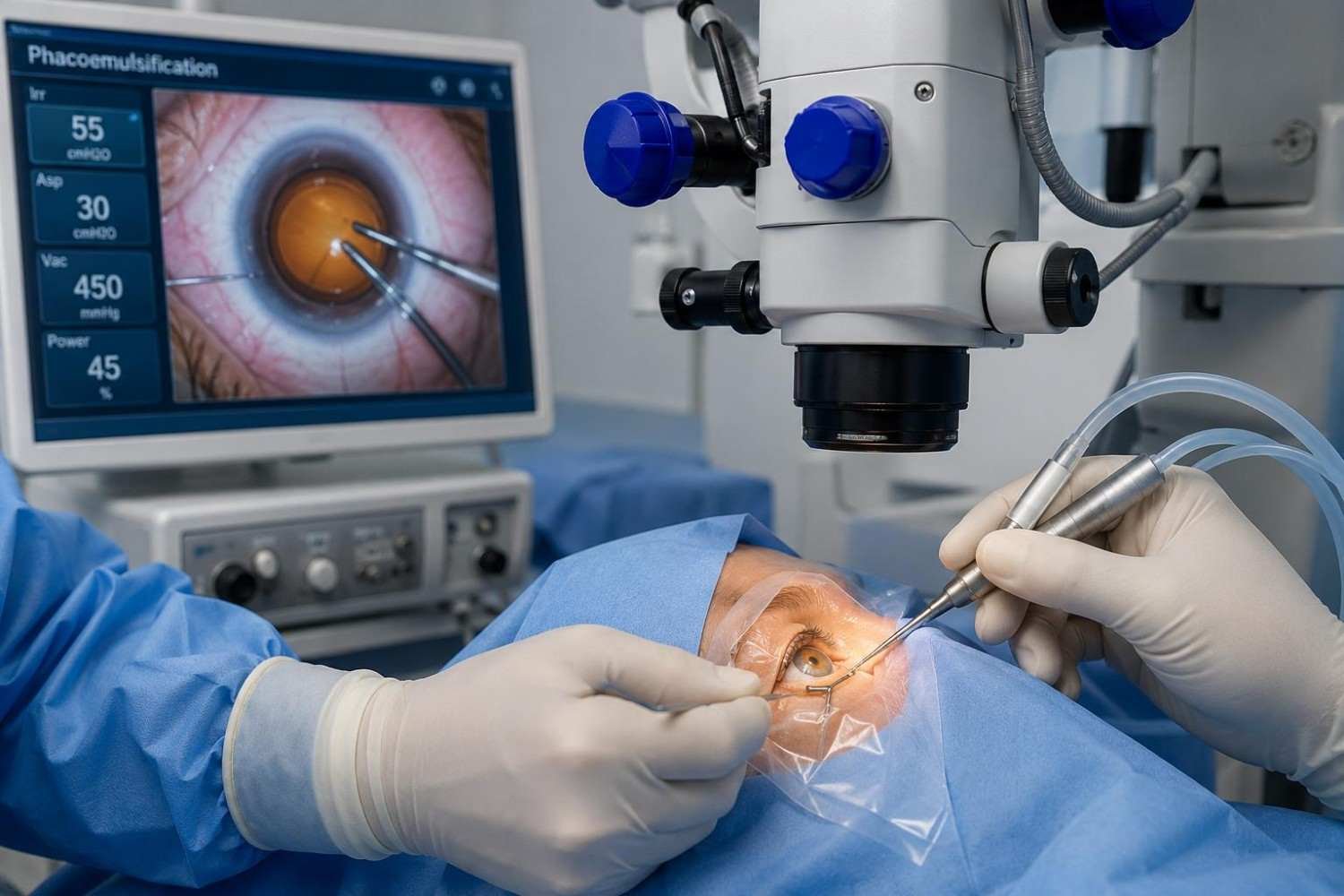
| 1. Surgical Technique | Phacoemulsification uses ultrasound through a sub-2.8 mm incision. SICS uses a manual self-sealing tunnel for dense cataracts. Femtosecond laser assists corneal cuts and rhexis. | SICS is often the most economical. Phaco balances rapid recovery with cost. Femto laser carries higher equipment charges. |
| 2. Type of Lens (IOL) | Monofocal lenses restore sharp vision at a single focal point. Toric corrects astigmatism. Multifocal/Trifocal/EDOF lenses reduce reliance on reading glasses. | The intraocular lens is usually the largest cost variable. Premium and custom imported lenses command higher package pricing. |
| 3. Cataract Density & Complexity | Hyper-mature, calcified, or rock-hard cataracts, pseudoexfoliation, or weak lens ligaments require capsular tension rings or specialized dyes. | Complex cases demand extra operative time, surgical adjuncts, and specialized surgeon expertise, slightly adjusting theatre fees. |
| 4. Pre-Operative Diagnostic Tests | Essential workup includes optical biometry (IOL Master), corneal topography, specular microscopy, OCT retina, and dilated fundus examination. | High-precision optical measurements ensure accurate lens power. Check if diagnostic workups are bundled or billed separately. |
| 5. Facility & Consumables | Includes sterile laminar airflow operating suites, phaco tubing, custom viscoelastics, disposable micro-blades, and local anaesthesia. | Day-care procedures avoid inpatient room rents. Accredited hospitals ensure premium sterility and patient safety protocols. |
| 6. Post-Op Drops & Follow-Ups | Topical antibiotic and anti-inflammatory eye drops are tapered over 4 weeks, along with scheduled 1-day, 1-week, and 1-month check-ups. | Some hospital packages include follow-up consultations and initial medicine kits, while others bill them separately. |
What to Ask Before Agreeing to a Cataract Surgery Quote
Obtaining a detailed, written breakdown protects you against unexpected expenses and ensures you are comparing identical services:
Recommended Surgical Method
- Which specific technique is recommended (Phaco, SICS, or Laser-Assisted)?
- Why is this specific method clinically appropriate for your cataract density?
- Is the choice driven by corneal health or lifestyle needs?
Lens Details & Brand Options
- Which specific IOL brand and model is quoted in your base estimate?
- What are the price differences between Indian and imported lens brands?
- Will this lens correct pre-existing astigmatism or near vision needs?
Package Inclusions & Exclusions
- Does the cost cover surgeon fees, theatre charges, and anaesthetist care?
- Are pre-operative optical biometry and scans included in the quote?
- What charges apply if an additional device (e.g., CTR ring) is needed?
Medicines & Follow-Up Coverage
- Are the post-operative eye drops and eye shield included in the discharge kit?
- How many follow-up visits are included free of cost after surgery?
- Is the quote strictly for one eye or does it cover both eyes?
Cashless Insurance & TPA Terms
- Does the hospital provide direct cashless tie-ups with your insurer or TPA?
- What is the approved cap or sub-limit for cataract surgery in your policy?
- Does your policy cover premium multifocal or toric lenses or only standard monofocal?
Post-Operative Support & Laser Policy
- What is the hospital's policy if secondary posterior capsular opacification (PCO) occurs?
- Is YAG laser capsulotomy handled as a separate outpatient procedure?
- Who should you contact in the clinic if you experience emergency symptoms?
Always ask for a transparent written estimate listing the technique, lens brand, and package inclusions before scheduling your surgery.
Comparison of Cataract Surgical Techniques & Costs
Each surgical method serves a distinct clinical purpose. The best technique is a clinical decision determined by lens density and eye health, not price alone:
| Technique | How It Works & Clinical Suitability | Cost & Financial Considerations |
|---|---|---|
| Small Incision Cataract Surgery (SICS) | Manual cataract extraction through a self-sealing tunnel incision (6–7 mm). Ideal for advanced, hard, mature, or hyper-mature cataracts common in rural and outreach cases. | Highly economical and accessible. Eliminates costly machine consumables while delivering safe, stitchless outcomes. |
| Standard Phacoemulsification | Micro-incision surgery (2.2–2.8 mm) using ultrasonic energy to liquefy the cloudy lens before inserting a foldable intraocular lens. The global gold standard for soft to moderately hard cataracts. | Mid-range to premium cost based on machine technology and selected foldable monofocal or toric IOLs. |
| Femtosecond Laser-Assisted Surgery (FLACS) | A computerized femtosecond laser creates the corneal incision, performs the capsulorhexis, and pre-fragments the cataract before phaco aspiration. | Higher price point due to specialized laser hardware, licensing, and disposable patient interfaces. |
Common Myths vs. Clinical Facts About Cataract Cost
Separating marketing misconceptions from practical ophthalmic realities:
| Common Belief | The Prevailing Myth | The Clinical Reality |
|---|---|---|
| Price vs. Visual Outcome | "The most expensive lens always guarantees the best visual outcome for everyone." | Visual success depends on ocular suitability. For patients with retinal issues or dry eyes, a standard monofocal provides sharper contrast than expensive multifocals. |
| Safety of Economical Surgery | "Lower cost surgical options like manual SICS are unsafe or substandard." | SICS is a globally recognized, highly safe technique that is clinically superior and safer for rock-hard, hyper-mature cataracts where ultrasound energy might harm the cornea. |
| Online Price Quotes | "The exact cost of cataract surgery can be finalized from an online price list." | Standard lists cannot account for corneal astigmatism, cataract density, pupil size, or systemic health. Accurate pricing requires an in-person eye exam. |
| Post-Surgery Glasses | "Paying for surgery means I will never need glasses for any task again." | Monofocal lenses still require reading glasses for close work. Even premium lenses may require mild reading aids in dim lighting. |
Extra Costs People Often Overlook
Budgeting accurately for cataract surgery requires accounting for ancillary care and post-operative needs.
Post-Operative Spectacles
If you choose a monofocal lens, you will need a pair of reading glasses after 4 weeks once the eye stabilizes, which is billed separately at optical shops.
Subsequent YAG Laser (PCO)
If the posterior capsule turns cloudy months or years after surgery, an outpatient 5-minute YAG laser capsulotomy may be needed and carries a separate minor fee.
Pre-Existing Eye Conditions
Co-existing conditions such as glaucoma, dry eye disease, or diabetic retinopathy may require additional medications, injections, or retina lasers.
Travel & Companion Logistics
Patients traveling from Mussoorie, Rishikesh, Haridwar, or Tehri should factor in local transport, temporary lodging, and a family escort for surgery day.
Sensible Ways to Manage Cataract Surgery Costs
Achieving the best balance of visual clarity, surgical safety, and personal budget.
Get Clinical Biometry First
Undergo optical biometry and medical evaluation first. Real optical measurements prevent overspending on lenses that your eyes may not clinically support.
Assess Lifestyle vs. Lens Cost
If clear distance driving vision is your primary goal and you do not mind simple reading glasses for books, a standard monofocal lens offers exceptional value.
Verify Insurance Early
Submit policy details to the hospital TPA desk before surgery day to clarify cashless eligibility, sub-limits, and co-payment clauses in advance.
When Should You Consult for Cataract Evaluation?
Do not delay surgery simply to defer costs; waiting until a cataract becomes hyper-mature can increase operative complexity.
Scheduled Clinical Assessment
Schedule an evaluation if you experience blurred distance vision, night driving glare, faded color vibrancy, or frequent changes in spectacle numbers.
Avoid Hyper-Mature Cataracts
Delaying treatment can cause lens-induced glaucoma, uveitis, or corneal swelling, turning a simple 15-minute day-care procedure into a complex surgery.
Insurance & Payment Check: Questions to Ask Your Insurer
Key Financial Checklist Before Undergoing Cataract Surgery
Contact your health insurance provider or check your TPA policy schedule for the following clauses:
Frequently Asked Questions About Cataract Surgery Cost
Cataract Surgery at Raahi Netradham, Dehradun
Raahi Netradham Eye Clinic is located on the 3rd Floor, Haridwar Bypass Road, Ajabpur Kalan, Dehradun, and is open Monday to Saturday, 9 AM to 6 PM (closed on Sundays). The clinic is committed to delivering accessible, high-precision ophthalmic care with a full spectrum of surgical options and intraocular lens technologies.
Our fellowship-trained cataract surgical team includes Dr. Isha Agarwalla, Dr. Mohit Garg, and Dr. Chintan Desai. Rather than offering one-size-fits-all pricing, the clinic provides individualized package recommendations following high-precision optical biometry and anterior segment examinations, ensuring optimal visual outcomes and clear financial transparency.
To arrange a cataract consultation or discuss insurance and package details, you can book an appointment online or contact the hospital directly at +91 7078082666. Please carry your current spectacles, past ophthalmic records, ongoing systemic prescriptions, and health insurance card for your visit.
Medical disclaimer: This article is for general informational and educational purposes only and does not replace direct clinical consultation with an ophthalmologist. Accurate diagnosis, surgical suitability, lens recommendations, and exact cost estimates require an in-person ophthalmic evaluation.