
Schedule Your Visit
Fill out the appointment form and our team will contact you shortly.
Cataract Surgery Near Mussoorie: Your Complete Guide to Care at Raahi Netradham, Dehradun
If you live in Mussoorie — or in Landour, Barlowganj, Bhatta Parwala, Kempty, or any of the surrounding hill communities — and your vision has been getting slowly worse, you already know what cataract surgery involves searching for: a genuinely qualified surgeon, a properly equipped hospital, and a facility close enough that the journey does not become the hardest part of the treatment.
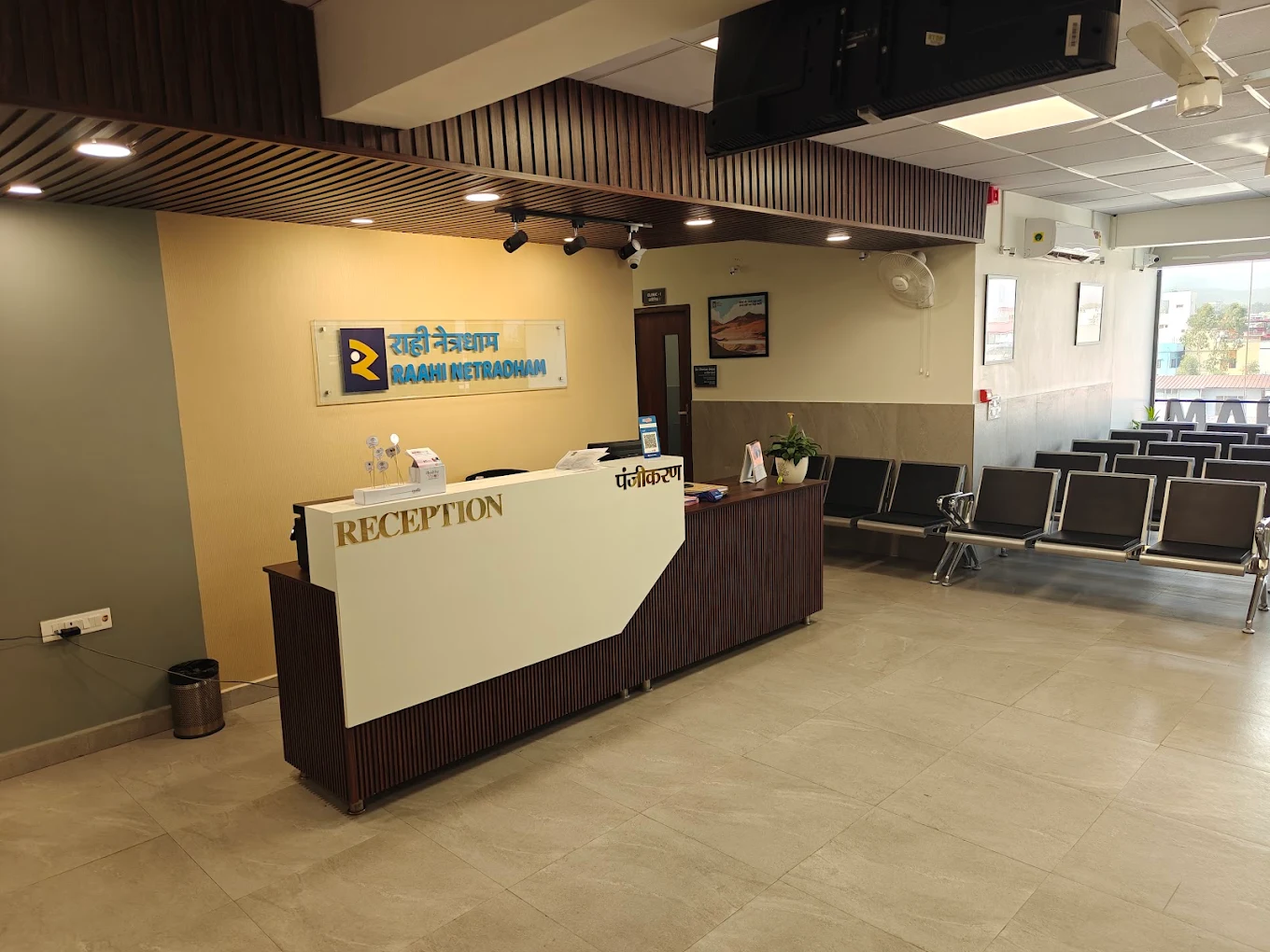
The hill road from Mussoorie to Dehradun is 35 kilometres. On a clear morning, with a sensible driver, it takes around 60 minutes. That journey brings you to Raahi Netradham on Haridwar Bypass Road — one of Uttarakhand's very few NABH-accredited eye hospitals, with a fellowship-trained cataract surgeon and the full range of IOL lens options that most Mussoorie patients have previously had to travel to Delhi to access.
This guide is written specifically for Mussoorie patients — and their families — who want to understand what cataract surgery involves, how to plan the visit from the hills, what to expect on the day, and how quickly they can return home.
Mussoorie Patients — Book Your Consultation at Raahi Netradham
60 minutes from Mussoorie | NABH Accredited | Fellowship Cataract Surgeon | All IOL Types
What This Guide Covers
- • The Mussoorie context — why good eye care near the hill station matters
- • Journey guide — Mussoorie to Raahi Netradham, Dehradun
- • What is a cataract — a plain-English explanation
- • Cataract surgery at Raahi Netradham — what Mussoorie patients receive
- • IOL lens options — the most important choice in cataract surgery
- • The two-visit plan — how most Mussoorie patients manage the process
- • What to expect on surgery day
- • Returning to Mussoorie after surgery — what is safe and when
- • Meet Dr. Isha Agarwalla — your cataract surgeon
- • FAQs from Mussoorie patients — answered directly
Distance from Mussoorie to Raahi Netradham
Mussoorie to Raahi Netradham, Haridwar Bypass Road, Dehradun: approximately 35 km by road via the Mussoorie-Dehradun highway.
Journey Details
Journey time: 50 to 70 minutes depending on traffic and road conditions. The clinic is easily accessible by private car, taxi, or shared vehicle from Mussoorie's Library Chowk or Picture Palace taxi stand.
The Mussoorie Context — Why This Matters
Mussoorie's population includes a significant proportion of retired residents, ex-servicemen, long-term hill settlers, and seasonal residents who maintain homes in the hills. Many of these patients are in the 55–75 age group — precisely the demographic where cataracts develop most commonly.
For decades, the options for a Mussoorie resident needing specialist eye surgery were limited: a basic eye clinic in Mussoorie itself for glasses and minor concerns, or a long journey to Delhi for anything more significant. Dehradun was always geographically closer but historically lacked the specialist surgical infrastructure that gave patients confidence.
Raahi Netradham changed this. Today, a Mussoorie resident with a cataract has access to fellowship-trained cataract surgery, NABH-certified surgical standards, and the full range of premium IOL options — 60 minutes from their front door.
What Is a Cataract — and When Does It Need Surgery?
The natural lens inside your eye is normally crystal clear — like a clean glass window. With age (and sometimes earlier in diabetic patients), this lens gradually becomes cloudy, yellow, and opaque. This is a cataract. As it worsens, less and less light reaches the retina, and your vision becomes progressively hazier, duller, and harder to correct with glasses.
Symptoms Mussoorie Patients Typically Describe
- • Difficulty seeing clearly along the Mussoorie Mall Road or the mountain ridgeline at dusk — glare from the fading light
- • Headlights on the winding road down to Dehradun appear as blinding haloes at night
- • Reading the Hindustan Times or a WhatsApp message requires progressively brighter light
- • Colours — the valley below, the Himalayan panorama — look washed out, yellowed, or flat
- • Spectacle prescriptions that change every few months, with diminishing improvement
- • One eye noticeably worse than the other
Cataract surgery is the only effective treatment — drops, glasses, and waiting do not help a cataract. However, surgery does not have to happen the moment a cataract is diagnosed. The right time is when the cataract is significantly affecting your quality of life — your ability to read, drive, cook, walk safely, or simply enjoy the view you moved to Mussoorie for.
When to Book — The Simple Test
If your cataract is affecting your daily activities — reading, cooking, driving the hill roads, recognising faces, or enjoying the Himalayan view that is one of Mussoorie's great gifts — it is time for surgery. A consultation at Raahi Netradham will confirm whether surgery is appropriate and give you a clear, honest assessment of what improvement you can expect.
Cataract Surgery at Raahi Netradham — What Mussoorie Patients Receive
The Technique — Phacoemulsification
All cataract surgery at Raahi Netradham is performed using phacoemulsification — the global gold-standard technique. The cloudy lens is broken up using ultrasound energy and removed through a tiny 2 to 3mm incision. A clear artificial IOL is then inserted. There are no stitches. No eye patch needed overnight. Most patients notice a significant improvement in vision within 24 to 48 hours.
The procedure takes approximately 20 minutes. It is done under local anaesthesia — numbing drops or a small injection around the eye — so you are awake but feel no pain. You go home the same day.
Pre-Operative Assessment
Before surgery, every Mussoorie patient receives a thorough pre-operative evaluation at Raahi Netradham — usually during a first consultation visit that can be scheduled before the surgery date. This includes:
- Visual acuity measurement — how clearly you currently see with each eye
- Slit lamp examination — the cataract type, density, and front-of-eye health
- Intraocular pressure measurement — checking for glaucoma
- Optical biometry (IOL Master) — the most precise measurement available for calculating the correct IOL power. This is the key measurement that determines how well you see after surgery
- Corneal topography — mapping the corneal surface for astigmatism, particularly important if a toric IOL is being considered
- Dilated fundus examination — checking the retina before surgery, especially important for diabetic patients and those with high myopia
- IOL discussion — Dr. Isha explains all lens options and discusses which is most appropriate for your visual needs and lifestyle
For Mussoorie Patients — The Two-Visit Plan
Visit 1 (Consultation): Complete pre-operative assessment, IOL selection, questions answered. Duration: 60 to 90 minutes.
Visit 2 (Surgery): Arrive, surgery in approximately 20 minutes, discharge same day or next morning.
Visit 3 (Day 1 follow-up): Brief check of the operated eye — can be done before returning to Mussoorie.
Subsequent follow-ups at Week 1 and Week 4 — can be scheduled on mornings that suit travel from the hills.
IOL Lens Options — The Most Important Choice in Cataract Surgery
The intraocular lens (IOL) implanted during your surgery stays in your eye permanently. Choosing the right lens for your lifestyle is one of the most important conversations you will have with Dr. Isha before surgery. Here is what is available at Raahi Netradham for Mussoorie patients:
| IOL Type | Best For | After Surgery |
|---|---|---|
| Monofocal IOL | Most patients — reliable, proven, excellent outcomes | Sharp distance vision; reading glasses still needed |
| Toric IOL | Patients with astigmatism (cylindrical power in glasses) | Corrects both cataract and cylinder; often glasses-free for distance |
| Multifocal IOL | Patients wanting both distance and near without glasses | Reduced spectacle dependence; some halos in early weeks |
| Trifocal IOL | Patients wanting distance, intermediate, and near clarity | Best glasses-free outcome; ideal for active Mussoorie lifestyle |
| EDOF IOL | Patients wanting smooth vision range with minimal halos | Excellent for distance and screens; good for hill road driving |
For many Mussoorie patients — particularly those who enjoy walking the mountain paths, reading on the veranda, watching the valley light change, and driving the Dehradun road — the trifocal or EDOF lens offers the greatest lifestyle benefit. Dr. Isha will discuss which lens best suits your specific visual needs and corneal anatomy.
Nirmala Sood, 67, Landour, Mussoorie
"Main Dehradun jaane se dara tha — socha bahut thakan hogi. Par Dr. Isha ne sab itna simple kar diya. Pehle ek baar gaye, sab check hua, lens choose kiya. Doosri baar operation. Teen ghante mein ghar wapas tha Mussoorie. Agla din itna clear tha aankhon se ki main khud hairaan tha. Ab Mussoorie ki pahadian, valleys — sab ek dum saaf dikhti hain. Kaafi saalon baad itna sundar laga."
("I was scared to go to Dehradun — I thought it would be very tiring. But Dr. Isha made everything so simple. First visit for all the checks, chose the lens. Second visit for surgery. Back home in Mussoorie within three hours. The next day vision was so clear I was astonished. Now the Mussoorie hills, the valleys — everything looks crystal clear. It has felt this beautiful after many years.")
How Most Mussoorie Patients Plan Their Cataract Surgery at Raahi Netradham
Mussoorie patients often ask: do I need to stay in Dehradun overnight? How many trips do I need to make? Can I plan it around a specific week?
Here is the typical plan for a Mussoorie resident having cataract surgery at Raahi Netradham:
| Visit | What Happens | Typical Duration | Overnight Stay? |
|---|---|---|---|
| Visit 1 — Consultation | Full pre-operative assessment, IOL discussion, questions answered, surgery date booked | 60-90 minutes at clinic | Not needed — return to Mussoorie same day |
| Visit 2 — Surgery Day | Arrive, pre-op preparation, surgery (20 min), recovery observation, discharge | Half day at clinic | Optional — most patients return to Mussoorie same evening; some prefer a Dehradun overnight |
| Visit 3 — Day 1 Follow-Up | Quick check: vision, IOP, eye appearance | 20-30 minutes | Not needed — can return to Mussoorie immediately after |
| Visit 4 — Week 1 Follow-Up | Full post-op assessment, spectacle assessment | 30-45 minutes | Not needed |
| Visit 5 — Week 4 Final Check | Final assessment, glasses prescription if needed | 30-45 minutes | Not needed |
Planning Tip for Mussoorie Patients
Book your consultation visit first — this can be any working day. Once the pre-operative assessment is complete, surgery is typically arranged within 1 to 2 weeks at a date and time that suits your schedule. Early morning surgery slots mean most Mussoorie patients are discharged by midday and can make the return journey up to Mussoorie in the afternoon when road traffic is lighter.
What to Expect on Surgery Day — A Step-by-Step Guide for Mussoorie Patients
- Arrive at Raahi Netradham, Haridwar Bypass Road, Dehradun — typically 7:30 to 8:00 AM for a morning surgery slot
- Registration and pre-operative preparation — dilating drops applied, blood pressure and pulse checked
- Wait for dilation — 20 to 30 minutes in the waiting area
- Surgical preparation — change into clean surgical gown, comfortable position on the surgical table
- Anaesthesia — local anaesthesia drops numb the eye surface; you may also receive a mild sedative to keep you relaxed
- Surgery — 15 to 25 minutes. You see only light during the procedure. There is no pain
- Recovery — 30 to 60 minutes resting in the clinic with an eye shield in place
- Discharge — Dr. Isha or the team explains what to do and not do; post-operative eye drops are prescribed
- Day 1 follow-up — ideally before returning to Mussoorie the following morning, or on the same day if surgery was early
Important Instructions
- • Bring: Sunglasses (the operated eye will be light-sensitive), a companion who can assist with transport
- • Do not: Drive yourself home; wear eye makeup; rub the operated eye
- • Eating: Eat normally before surgery unless advised otherwise
- • Medications: Take all regular medications as normal — inform Dr. Isha of blood thinners in advance
Returning to Mussoorie After Cataract Surgery — What Is Safe and When
This is the question Mussoorie patients ask most frequently — and the answer is reassuring.
| Activity | When It Is Safe After Surgery |
|---|---|
| Travelling as a passenger on the Mussoorie road | Same day or next day — wear sunglasses, do not rub eye |
| Driving on the hill roads | After 1-2 weeks, once vision has stabilised and Dr. Isha has confirmed |
| Walking the Mall Road or mountain paths | Day 2 onwards — wear sunglasses, avoid dusty areas |
| Reading, watching television, using phone | Day 1 onwards — vision improves rapidly |
| Cooking and household activities | Day 2 onwards — avoid bending the head down sharply initially |
| Bathing — face and hair washing | After 1 week — avoid direct water contact with operated eye for 2 weeks |
| Swimming or river bathing | After 4 weeks minimum |
| Strenuous activity, heavy lifting | After 2 weeks minimum |
| Eye drops — antibiotic and anti-inflammatory | Continue for 4-6 weeks as prescribed |
The mountain environment of Mussoorie is not a concern for cataract recovery — the clean air and moderate climate are, if anything, preferable to dusty urban environments. The main precautions are the same for all cataract patients: no rubbing, no water contact with the eye for 2 weeks, sunglasses outdoors, and continuing the prescribed eye drops. Dr. Isha will give you a clear written post-operative instruction sheet tailored to your situation.
Meet Dr. Isha Agarwalla — Your Cataract Surgeon
Fellowship-trained Cataract Surgeon, Oculoplastic Specialist & Ocular Oncologist providing advanced cataract care with personalised treatment at Raahi Netradham Eye Clinic, Dehradun.

Dr. Isha Agarwalla
Cataract Surgeon, Oculoplastic Specialist & Ocular Oncologist — Raahi Netradham Eye Clinic, Dehradun
Dr. Isha Agarwalla holds an MBBS, DNB in Ophthalmology, the FAICO fellowship in oculoplastic surgery (Fellow of the All India College of Ophthalmologists), and MNAMS (Member of the National Academy of Medical Sciences). She performs advanced phacoemulsification cataract surgery with the full range of IOL options — monofocal, toric, multifocal, trifocal, and EDOF — for patients across Dehradun and the wider Uttarakhand region, including regular patients from Mussoorie, Landour, Barlowganj, and the surrounding hill communities.
Every cataract patient receives optical biometry (IOL Master) for precise lens power calculation, corneal topography for astigmatism assessment, and a dilated retinal examination before surgery is planned. The IOL selection is discussed at the consultation — not prescribed as a default — with each patient's lifestyle, visual goals, and corneal anatomy considered individually.
Modern Micro-Incision Technique
Monofocal, Toric, Multifocal, Trifocal & EDOF
Biometry, Topography & Retina Check
Raahi Netradham Eye Clinic
At a Glance — What Mussoorie Patients Can Expect
| Detail | Specification |
|---|---|
| Surgical technique | Phacoemulsification — 2-3mm incision, no stitches, same-day discharge |
| IOL options | Monofocal | Toric | Multifocal | Trifocal | EDOF — all available |
| Biometry | Optical biometry (IOL Master) — precise lens calculation |
| Pre-op retina check | Dilated fundus exam + OCT — especially for diabetic and high myopia patients |
| Anaesthesia | Local — topical drops or peribulbar injection; no general anaesthesia |
| Surgery duration | 15-25 minutes per eye |
| Discharge | Same day in most cases |
| Day 1 follow-up | Before returning to Mussoorie — 20-30 minutes at clinic |
| Return to Mussoorie | Same day or next morning as passenger — not driving |
| Hospital | Raahi Netradham, Haridwar Bypass Rd, Dehradun — NABH accredited |
| Contact | +91 7078082666 | WhatsApp | raahinetradham.com |
Why Mussoorie Patients Choose Raahi Netradham Over Local Options
There are eye clinics in Mussoorie for basic vision care and glasses. For cataract surgery specifically, Mussoorie patients face a genuine choice: local basic care, or the journey to Dehradun for specialist-level surgery. The patients who have made that journey to Raahi Netradham consistently cite the same reasons:
NABH Accreditation
The only independently verified quality standard in Indian eye hospital care. No local Mussoorie clinic holds this certification.
Fellowship-Trained Surgeon
Dr. Isha Agarwalla's FAICO fellowship in oculoplasty and cataract surgery represents the highest post-qualification training available. No local Mussoorie option matches this.
Premium IOL Availability
Trifocal and EDOF lenses require specialist expertise and equipment to select and implant correctly. These are available at Raahi Netradham for patients who want the best chance of spectacle independence.
Optical Biometry
The IOL Master provides measurement precision that significantly reduces the chance of residual refractive error after surgery. This equipment is not available at most smaller hill clinics.
In-House Retinal Evaluation
Particularly important for diabetic Mussoorie patients who need their retina checked before cataract surgery.
60-Minute Journey
The same standard of care as Delhi's premier eye hospitals, without the 6-hour journey.
Specialist Cataract Care at Raahi Netradham, Dehradun
Advanced Phacoemulsification, Premium IOLs, and Optical Biometry — All under one roof.
Call: +91 7078082666 | WhatsApp | raahinetradham.com