
Schedule Your Visit
Fill out the appointment form and our team will contact you shortly.
Eye Care After Retina Surgery: What Patients Must Do in the First 3 Months
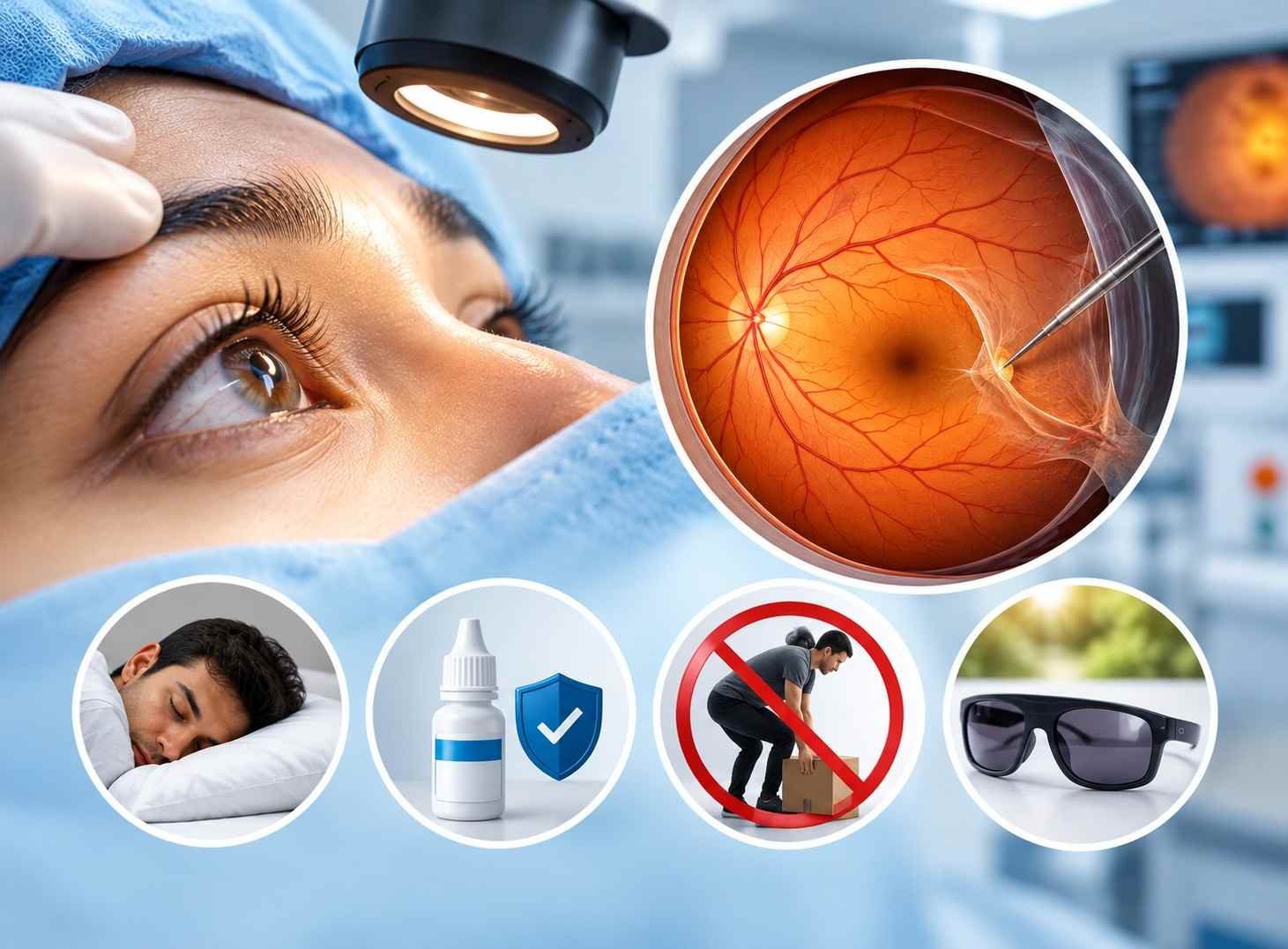
A retina operation repairs the problem, but what happens afterwards matters just as much. Using your drops on time, protecting the eye, keeping your head in the right position when advised, and attending every review all influence how well the eye heals. Good eye care after retina surgery supports healing and helps reduce the risk of complications.
Recovery is not the same for everyone. It depends on the type of procedure, the retinal condition that needed treatment, and whether a gas bubble or silicone oil was placed inside the eye. This guide explains what patients and families can generally expect in the first three months. Your retina surgeon’s instructions always come first.
If you are recovering in Uttarakhand, the retina specialist in Dehradun at Raahi Netradham can give you instructions specific to your surgery.
Recovering from Retina Surgery? Get Expert Guidance at Raahi Netradham
Dehradun Location | NABH Accredited | FVRS + FVRSSN Specialists | Post-Operative Care & Support
Book Your Eye Consultation in Dehradun
Get comprehensive eye care at Raahi Netradham with fellowship specialists, advanced diagnostics, and in-house treatment facilities.
What Happens After Retina Surgery?
Retinal procedures aim to reattach the retina or support it while it heals. Common ones include:
- • Retinal detachment surgery: the general term for surgery that reattaches a detached retina, using one or more of the techniques below.
- • Vitrectomy: the vitreous gel is removed so the surgeon can repair the retina. A gas bubble or silicone oil is often placed inside the eye afterwards.
- • Scleral buckling: a soft silicone band is placed on the outer wall of the eye to support the retina.
- • Pneumatic retinopexy: a small gas bubble is injected into the eye, usually along with laser or freezing treatment, to close a retinal break.
- • Surgery involving gas or silicone oil: these fillings hold the retina in place while it heals and affect both your vision and your precautions.
In the first days, it is common to have temporary blurred vision, redness, mild discomfort, watering or some swelling of the eyelids. These usually ease gradually. Recovery varies between patients and procedures.
First 3 Months Recovery Timeline
| Recovery Period | What Patients May Experience | Important Care Instructions |
|---|---|---|
| First 24–48 Hours | Blurred vision, redness, watering, mild ache. The eye may be padded or shielded. | Rest, wear the shield as advised, start drops and follow any head-position instructions. Do not rub the eye. |
| Week 1 | Redness and swelling gradually settle. Vision may stay blurry, with a wobbling line if gas is present. | Keep to the drop schedule, keep water away and continue positioning if advised. Avoid lifting and dust. |
| Weeks 2–4 | Comfort improves and vision may fluctuate. Gas, if used, slowly shrinks. | Continue drops as directed, as they may change. Ask before returning to work, exercise or travel. |
| Month 2 | Vision may slowly improve, though it can still be blurred or distorted. | Keep attending reviews. Resume activities only as cleared. Report new floaters, flashes or a shadow at once. |
| Month 3 | Many patients feel more settled, though improvement can continue beyond this point. | Review progress with your surgeon. Discuss glasses, silicone oil removal if relevant, and long-term follow-up. |
Essential Precautions After Retina Surgery
Following your retina surgery, adhering strictly to post-operative instructions is vital for supporting recovery and reducing the risk of complications:
Use Prescribed Eye Drops Correctly
- Wash hands thoroughly with soap and water before every dose
- Instill one drop in the lower lid pouch without touching the tip to the eye
- Do not stop, reduce, or change drops without consulting your surgeon
Avoid Rubbing or Pressing the Eye
- Rubbing strains healing incisions and raises infection risk
- Dab gently around the eye with a clean tissue if itching occurs
- Inform your doctor if persistent discomfort or itching occurs
Follow Head Positioning Instructions
- Allows gas bubble to press against the specific retinal area needing support
- Duration and specific angle depend on your surgeon's directions
- Seek assistance from family if maintaining position is difficult
Protect Your Eye While Sleeping
- Wear the recommended protective eye shield at night
- Prevents accidental rubbing or pressing against pillows in your sleep
- Keep the protective eye shield clean and dry as directed
Maintain Proper Eye Hygiene
- Wipe face with a clean damp cloth, avoiding the operated eye
- Take baths from the neck down to prevent dirty tap water entry
- Tilt head backward when washing hair so soap/water stays away
Avoid Heavy Lifting & Strenuous Activities
- Avoid heavy lifting, intense exercise, and forward bending
- Avoid swimming and contact sports to prevent infection and injury
- Light walking is usually fine; ask before resuming daily activities
Attending every follow-up appointment allows your retina specialist to check eye pressure and healing progress, ensuring early detection of any potential complications before symptoms appear.
Gas Bubble After Retina Surgery: Important Precautions
A gas bubble is placed inside the eye to press gently against the retina and hold it in position while the repair seals. Here is a summary of crucial guidelines regarding gas bubble care:
| Aspect | Key Guidelines & Patient Instructions |
|---|---|
| Vision Expectations | Vision is usually very blurred while gas is present, with a visible moving line at the edge of the bubble. Vision gradually improves as the bubble shrinks. |
| Gas Absorption | The body slowly absorbs the gas and replaces it with natural fluid over time, depending on the specific gas mixture used by your surgeon. |
| Head Positioning | Because the bubble floats, maintaining the exact prescribed head position ensures constant support to the detached or treated area of the retina. |
| Air Travel & Altitude Restrictions | Strictly prohibited: Do NOT travel by air or go to high-altitude areas. Decreased atmospheric pressure causes the gas to expand, leading to dangerously high eye pressure and severe vision damage. |
| Anesthesia Precautions | Inform any doctor or anesthetist before undergoing medical, surgical, or dental procedures under anesthesia, as certain gas anesthetics can cause the eye bubble to expand rapidly. |
Gas Bubble vs. Silicone Oil
Understanding the key differences between temporary gas tamponade and silicone oil placement in retinal surgery:
| Feature | Gas Bubble | Silicone Oil |
|---|---|---|
| What it is | A specialized medical gas that is absorbed naturally by the eye over time | A clear, thick liquid that remains in the eye until it is surgically removed |
| Absorption | Disappears on its own and is gradually replaced by the eye's natural fluid | Does not disappear on its own; remains stable inside the eye |
| Second Procedure? | Usually not required for removal | Often requires a second surgical procedure to remove the oil once healed |
Can You Read, Watch TV, or Use a Mobile Phone After Retina Surgery?
In most cases, yes. Reading, watching television, and using a phone or computer do not harm a healing retina. The limits are practical: vision may be blurred, the eye may tire quickly, and you may need to maintain a specific head position.
Short Sessions & Regular Breaks
Use short sessions with regular breaks, and stop immediately if the eye becomes tired or uncomfortable.
Screen Use During Positioning
If you have a gas bubble and must keep your head in a specific position, ask your surgeon how to view screens safely without disturbing position.
Diet and Lifestyle After Retina Surgery
No food can repair the retina or guarantee better vision, but good general health supports healing.
Balanced Diet & Protein
Eat regular meals with protein, such as dal, eggs, paneer, curd, fish, or lean meat, plus whole grains.
Fruits, Vegetables & Hydration
Include colourful vegetables and seasonal fruit each day, and drink enough water unless advised otherwise.
Diabetes & Blood Sugar Control
If you have diabetes, keep blood sugar well controlled and attend your retina and diabetes reviews to protect the retina long-term.
Avoid Smoking
Smoking harms blood vessels and impairs healing; it is best to stop completely.
Regular Medicines
Continue regular medicines for conditions such as diabetes or blood pressure as prescribed, and tell your surgeon about all medicines you take.
Vision Recovery After Retina Surgery: What Should You Expect?
Vision recovery after retina surgery is usually gradual and can take weeks or months. Gas or oil inside the eye blurs vision at first, the retina needs time to settle, and nerve cells need time to recover.
Original Retinal Condition
A detachment that was caught early often achieves better visual outcomes than one that was present for a long time before surgery.
Macular Involvement
The macula provides sharp central vision; if it was detached, central vision may remain reduced or distorted even after the retina is reattached.
Gas or Silicone Oil
Vision usually improves progressively as internal gas clears naturally or after silicone oil is removed during a second procedure.
Co-existing Eye Conditions
Other conditions such as diabetes, glaucoma, high myopia, or cataracts can also limit the final visual outcome.
Realistic Expectations
A successful reattachment does not always mean vision returns to pre-surgery levels. Some distortion or glasses prescription changes may occur; discuss realistic expectations with your surgeon.
Warning Signs After Retina Surgery
When to Contact Your Doctor Immediately
Contact your retina doctor promptly if you notice:
Frequently Asked Questions About Eye Care After Retina Surgery
Get Expert Retina Care at Raahi Netradham, Dehradun
Every retinal surgery is different, so your recovery plan should be too. Personalised instructions on drops, positioning, activity and travel, along with regular follow-up with a retina specialist, give your eye the best chance to heal well.
Raahi Netradham is an eye care hospital in Dehradun offering retina services, including retina treatment at Raahi Netradham for conditions such as retinal detachment, diabetic retinopathy and macular disorders. Vitreoretina surgeon Dr. Mohit Garg and the team provide vitreoretinal surgery services along with follow-up care, so patients across Uttarakhand can receive retina care closer to home.
If you or a family member has had retina surgery, consult the retina team for personalised recovery guidance. Do not delay if you notice a sudden change in vision.