
Schedule Your Visit
Fill out the appointment form and our team will contact you shortly.
How to Choose the Best Cataract Surgeon in Dehradun: A Patient's Complete Guide
Your mother has been saying it for months — "aankhein thodi dhundhli ho gayi hain." Things that used to be sharp now look hazy. Reading the newspaper under the morning light at your home in Dalanwala has become a daily struggle. The local optician has said the glasses cannot be changed anymore. It is a cataract.
Now comes the harder question: who do you trust to operate on your mother's eye?
In Dehradun alone, there are dozens of eye clinics offering cataract surgery. Some are genuine centres of excellence. Others look the part but lack the advanced equipment, the surgical expertise, or the experience needed to deliver consistently excellent outcomes. For patients and families making this decision for the first time, the choices can feel confusing and overwhelming.
Cataract surgery is one of the safest and most successful eye procedures in modern medicine—but the quality of your results depends greatly on the surgeon, the technology used, and the quality of care before, during, and after surgery.
This guide is written specifically for patients in Dehradun and across Uttarakhand—from Rajpur Road to Raipur, from Mussoorie to Haridwar. It explains, in simple and honest language, exactly what qualifications to look for, which questions to ask during your consultation, what technology matters, and the warning signs that should make you consider another clinic.
By the end of this guide, you'll know how to confidently choose the best cataract surgeon in Dehradun and make an informed decision that helps protect your vision for years to come.
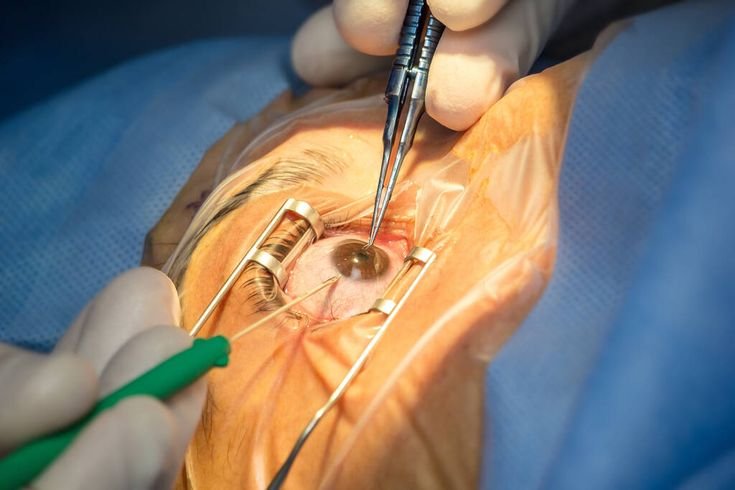
Ready to Meet Dehradun's Cataract Specialist?
Book your cataract consultation with Dr. Isha Agarwalla at Raahi Netradham, a NABH-accredited eye hospital on Haridwar Bypass Road. Get expert evaluation, advanced cataract surgery, premium IOL lens guidance, and personalized treatment for clearer vision.
What This Guide Covers
Choosing the best cataract surgeon in Dehradun is about much more than comparing prices or selecting the nearest clinic. This guide walks you through every important factor that helps patients make an informed and confident decision before undergoing cataract surgery.
- Step 1 — Check the qualifications first
- Step 2 — Ask about surgical experience and volume
- Step 3 — Understand the technique — phaco or something older?
- Step 4 — IOL lens options — are they explaining all of them?
- Step 5 — Is the hospital NABH accredited?
- Step 6 — Does the clinic have the right diagnostic equipment?
- Step 7 — Is there a proper pre-operative evaluation?
- Step 8 — How does the surgeon communicate?
- The 10 questions to ask before you book
- Red flags — when to walk away
- Meet Dr. Isha Agarwalla — Dehradun's cataract specialist
Looking for an Expert Cataract Consultation?
Book an appointment with Dr. Isha Agarwalla at Raahi Netradham, an NABH-accredited eye hospital in Dehradun offering advanced phacoemulsification surgery, premium IOL lenses, and comprehensive cataract care.
Need an Appointment?
Our team will help you understand your cataract condition, explain lens options, and guide you toward the most suitable treatment plan.
Call: +91 7078082666
WhatsApp: Available for appointment booking
No referral required.
How to Choose the Right Cataract Surgeon in Dehradun
8 Essential Steps to Ensure Your Vision is in Safe, Experienced Hands.
Check the Qualifications First
This is the starting point — and unfortunately, it is one most patients skip because they assume any doctor calling themselves an eye specialist is adequately trained for surgery. In India, that assumption is not always safe. For cataract surgery specifically, the minimum you should look for is a postgraduate surgical qualification in ophthalmology.
| Qualification | What It Means | Is It Enough for Cataract Surgery? |
|---|---|---|
| MBBS | Basic medical degree — 5.5 years | No — not sufficient on its own |
| MS Ophthalmology | 3-year surgical specialisation in eye care | Yes — gold standard surgical training |
| DNB Ophthalmology | National Board equivalent of MS — equal in standard | Yes — fully equivalent to MS |
| FAICO | Fellowship of All India College of Ophthalmology | Excellent — subspecialty depth |
| MNAMS | Member of National Academy of Medical Sciences | Strong — peer-verified excellence |
| DO (Diploma) | 2-year diploma — shorter than MS/DNB | Adequate for basic care |
MBBS | DNB in Ophthalmology | FAICO (Fellow — All India College of Ophthalmology) | MNAMS (Member — National Academy of Medical Sciences). Trained across premier eye institutes in India. Practising cataract and oculoplastic surgery at Raahi Netradham on Haridwar Bypass Road.
Ask About Surgical Experience and Volume
Qualifications tell you what a surgeon knows. Surgical volume tells you what they can do — especially under pressure, when anatomy is unusual, or when a complication arises. Complication rates decrease significantly as surgeon experience increases, particularly for phacoemulsification.
"I am often asked by patients: how many cataract surgeries have you done? The honest answer is — well over a thousand, and this matters. Not because numbers alone make a surgeon good, but because every case teaches you something. Complex cataracts, small pupils, dense brunescent cataracts, diabetic patients — these cases require a depth of experience that only comes with volume."
Understand the Technique — Phaco or Something Older?
Not all cataract surgery in Dehradun is done the same way. The difference between techniques matters significantly for your recovery, comfort, and visual outcomes.
| Technique | What It Involves | Incision Size | Recovery | Standard? |
|---|---|---|---|---|
| Phacoemulsification (Phaco) | Ultrasound probe breaks up cloudy lens | 2-3mm (No stitches) | 24-48 hours | Global Gold Standard |
| Manual SICS | Lens nucleus removed manually | 5-7mm | 3-7 days | Widely Used in India |
| ECCE | Large incision, entire lens removed | 10-12mm (Stitches) | 4-8 weeks | Outdated |
| FLACS (Laser-Assisted) | Laser performs initial steps before phaco | 2-3mm | 24-48 hours | Premium Option |
IOL Lens Options — Are They Explaining All of Them?
The intraocular lens (IOL) implanted stays in your eye for life. At Raahi Netradham, Dr. Isha Agarwalla discusses all IOL options with every patient based on lifestyle and vision needs.
| IOL Type | Best Suited For | Vision Outcome | Spectacle Dependence |
|---|---|---|---|
| Monofocal IOL | Most patients — reliable & proven | Excellent distance vision | Reading glasses still needed |
| Toric IOL | Patients with astigmatism | Corrects cataract + cylinder | Distance glasses usually not needed |
| Multifocal IOL | Distance and near vision preference | Good distance & near vision | Significantly reduced spectacle use |
| Trifocal IOL | Distance, intermediate & near vision | Best full visual range | Minimal to none |
| EDOF IOL | Smooth visual range with low halos | Great distance & intermediate | Minimal halos — good for drivers |
Is the Hospital NABH Accredited?
NABH accreditation is India's premier hospital quality standard verifying OT sterility, infection control, staff credentials, and emergency readiness.
One of the very few eye hospitals in Uttarakhand to hold NABH accreditation on Haridwar Bypass Road, Dehradun.
In-House Diagnostic Equipment
- Optical Biometry (IOL Master): Precise lens calculations
- Corneal Topography: Surface mapping for Toric IOLs
- OCT Scan: Retinal imaging before surgery
- A-Scan Ultrasound: Backup for dense cataracts
Proper Pre-Operative Evaluation Checklist
- Best corrected visual acuity
- Slit lamp cataract & corneal check
- Optical biometry with IOL Master
- Dilated fundus examination
- Corneal topography check
- Intraocular pressure measurement
- Medical fitness (Diabetes/BP check)
Book your comprehensive assessment with Dr. Isha Agarwalla at Raahi Netradham.
10 Questions to Ask Before You Book Cataract Surgery
Print this list or keep it handy for your consultation. A good cataract surgeon will be glad to answer every single question.
- What are your exact qualifications and where did you train?
- How many phacoemulsification surgeries do you perform monthly?
- What technique will you use for my surgery — and why?
- Which IOL are you recommending for me, and why?
- Is this hospital NABH accredited?
- Will optical biometry (IOL Master) be used for lens power?
- Will my retina be checked before surgery?
- What is your personal rate of posterior capsule rupture?
- How are surgical complications managed if they occur?
- How many follow-up visits are included in care?
Red Flags — When to Walk Away From a Cataract Clinic in Dehradun
Choosing the right cataract surgeon is just as important as deciding to have surgery. Watch for these warning signs before trusting any eye clinic with your vision.
No Ophthalmology Specialization
The surgeon holds only an MBBS degree and does not have a postgraduate qualification in Ophthalmology.
Outdated Eye Measurements
The clinic does not have an optical biometry machine and relies only on ultrasound A-scan for lens calculations.
Only One Lens Option Offered
The doctor recommends a single intraocular lens (IOL) without discussing other suitable options or explaining the differences.
No NABH Accreditation
The hospital lacks NABH accreditation, which is an important indicator of quality standards and patient safety.
Rushed Consultation
Surgery is advised without a proper dilated eye examination or enough time spent evaluating your condition.
No Retinal Evaluation
The clinic skips a pre-operative retinal examination, especially concerning for patients with diabetes or retinal disease.
Discourages Second Opinions
The surgeon makes you feel uncomfortable or guilty for seeking another medical opinion before surgery.
Pressure to Book Immediately
You're told to book surgery immediately with statements like, "This slot won't be available tomorrow."
Avoids Questions About Risks
The doctor gives vague or dismissive answers when you ask about complication rates or how unexpected situations are managed.
No Post-Operative Care Plan
The clinic provides no written instructions, medication schedule, or follow-up plan after cataract surgery.
Remember
Your Vision Matters
Never feel pressured into cataract surgery. A reputable eye surgeon will explain your options, answer your questions, and encourage informed decision-making.
Expert Advice
"A trustworthy cataract clinic focuses on patient education, thorough evaluation, transparent communication, and long-term vision outcomes—not rushed decisions."
— Cataract Care TeamMeet Dr. Isha Agarwalla — Dehradun's Cataract Specialist at Raahi Netradham
Fellowship-trained Cataract Surgeon, Oculoplastic Specialist & Ocular Oncologist providing advanced cataract care with personalised treatment at Raahi Netradham Eye Clinic, Dehradun.

Dr. Isha Agarwalla
Cataract Surgeon, Oculoplastic Specialist & Ocular Oncologist
Dr. Isha Agarwalla is Dehradun's fellowship-trained cataract and oculoplastic surgeon at Raahi Netradham Eye Clinic—one of Uttarakhand's very few NABH-accredited eye hospitals. She holds an MBBS, DNB in Ophthalmology, FAICO (Fellow of the All India College of Ophthalmologists), and is a proud Member of the National Academy of Medical Sciences (MNAMS).
She performs advanced phacoemulsification cataract surgery using the complete range of intraocular lens (IOL) options, including monofocal, trifocal, toric, and EDOF premium lenses for patients seeking excellent vision and greater spectacle independence after surgery.
Every patient undergoes a comprehensive pre-operative assessment, including optical biometry, corneal topography, and retinal evaluation, ensuring the most suitable lens is selected for their lifestyle and visual needs.
Modern Micro-Incision Technique
Monofocal, Toric, Trifocal & EDOF
Biometry, Topography & Retina Check
Raahi Netradham Eye Clinic