Schedule Your Visit
Fill out the appointment form and our team will contact you shortly.
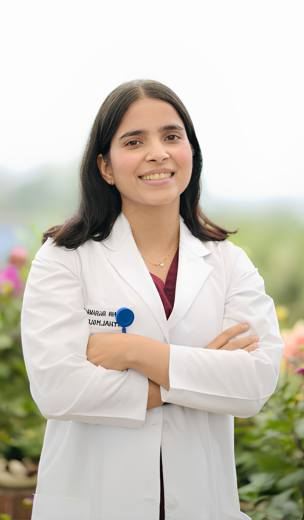
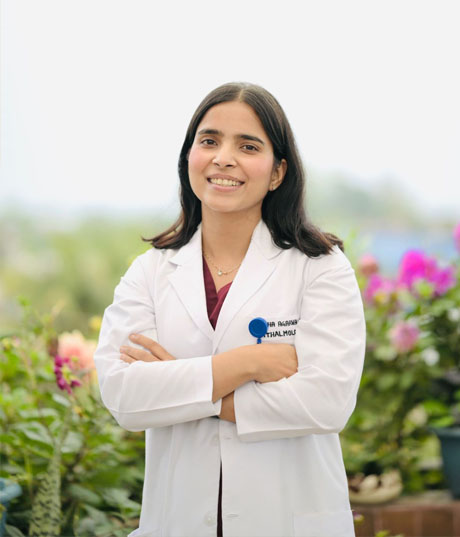
Meet Dr. Isha Agarwalla: Best Oculoplasty Surgeon in Dehradun, India
When patients in Dehradun — or in Mussoorie, Haridwar, Rishikesh, Tehri, or anywhere across Uttarakhand — have a drooping eyelid, a persistent watery eye, a suspicious lump near the eyelid, or an injury that has damaged the delicate structures around the eye, they need a very specific kind of surgeon. Not a general eye doctor. Not a plastic surgeon who occasionally works near the eye. An oculoplastic surgeon — someone trained at the precise intersection of ophthalmology and reconstructive surgery.
In Dehradun and across Uttarakhand, that surgeon is Dr. Isha Agarwalla.
With an MBBS, DNB in Ophthalmology, FAICO fellowship in oculoplasty, and MNAMS, Dr. Isha is one of the very few fellowship-trained oculoplastic specialists available in the state. At Raahi Netradham on Haridwar Bypass Road — one of Uttarakhand's very few NABH-accredited eye hospitals — she brings a level of subspecialty expertise to eyelid, lacrimal, and orbital care that previously required a journey to Delhi.
This article introduces Dr. Isha Agarwalla in full — her qualifications, her training, every condition she treats, and the values that define how she approaches her patients. If you are considering oculoplastic surgery in Dehradun or looking for the right specialist for an eyelid or ocular oncology concern, this is everything you need to know.
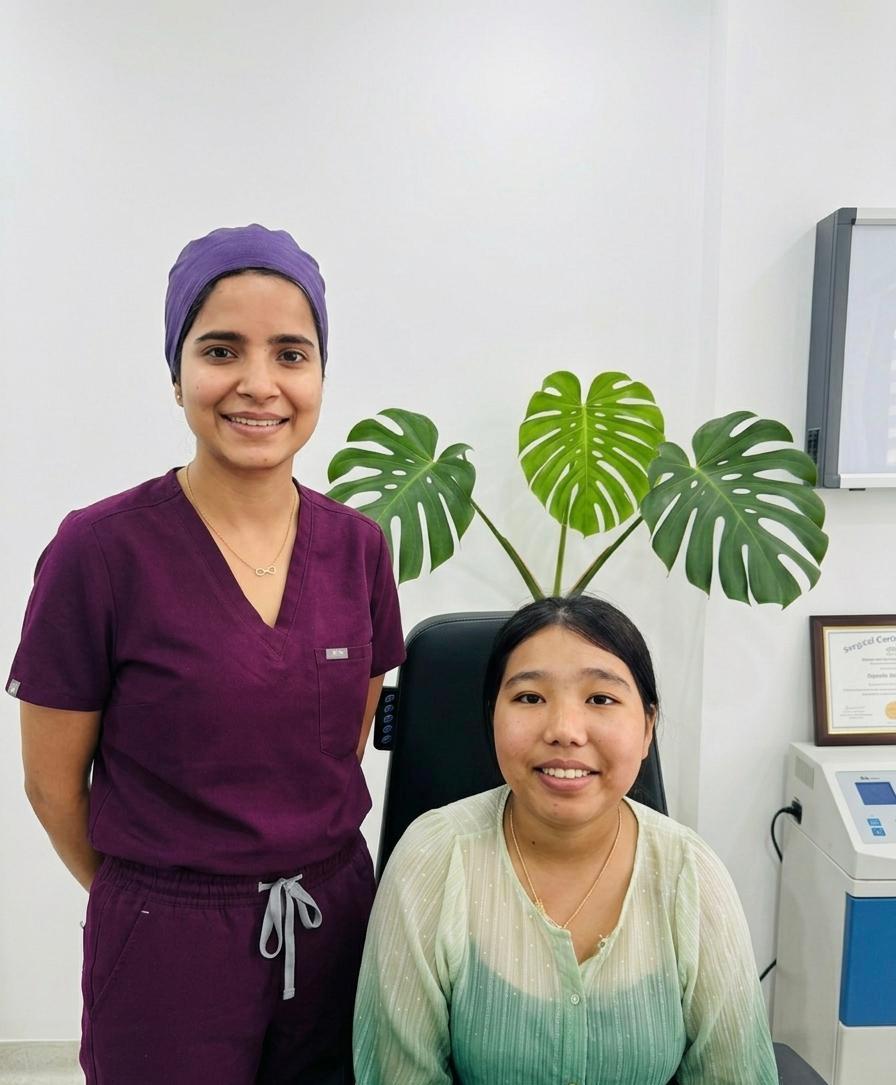
Book a Consultation With Dr. Isha Agarwalla
Oculoplasty | Cataract | Ocular Oncology — Raahi Netradham, Dehradun | NABH Accredited
 FAICO Certified
Dr. Isha Agarwalla
MBBS | DNB (Ophthalmology) | FAICO | MNAMS
Oculoplastic Surgeon · Ocular Oncologist · Cataract & Refractive Specialist
Haridwar Bypass Road, Ajabpur Kalan, Dehradun 248012
DNB — Diplomate of National Board in Ophthalmology
FAICO — Fellow of the All India College of Ophthalmologists (Oculoplasty)
MNAMS — Member of National Academy of Medical Sciences
Raahi Netradham, Haridwar Bypass Road, Dehradun
The Qualifications — What They Mean for Patients
MBBS and DNB — The Foundation
Dr. Isha Agarwalla's clinical foundation is an MBBS followed by a DNB in Ophthalmology — the Diplomate of National Board, which is the full equivalent of an MS in Ophthalmology in terms of surgical training and assessment rigour. This is the baseline qualification for a surgical eye specialist in India.
FAICO — The Oculoplasty Fellowship That Sets Her Apart
The most significant qualification in Dr. Isha's profile for patients seeking oculoplastic care is the FAICO — Fellow of the All India College of Ophthalmologists — specifically in oculoplasty.
The FAICO fellowship in oculoplasty is an advanced, subspecialty-specific training programme that takes a qualified ophthalmologist and trains them specifically in ophthalmic plastic and reconstructive surgery. This covers:
This fellowship cannot be completed by self-study or general practice. It requires exposure to high volumes of subspecialty oculoplastic cases under a trained faculty — exposure that builds the specific surgical instincts, tissue handling skills, and anatomical depth that make the difference between a technically adequate repair and one that looks and functions beautifully.
What Dr. Isha Agarwalla Treats — The Complete Oculoplasty Range
Ptosis — Drooping Eyelid
Ptosis is a drooping of the upper eyelid — which can affect one eye or both, and ranges from mild to severe. In adults, it is most commonly caused by age-related stretching of the levator muscle tendon. In children, it may be congenital — present from birth. Trauma, nerve damage, and Horner syndrome can also cause ptosis.
| Type of Ptosis | Cause | Dr. Isha's Surgical Approach |
|---|---|---|
| Aponeurotic (age-related) | Levator tendon stretching — most common in adults | Levator aponeurosis repair — precise, natural-looking result |
| Congenital | Underdevelopment of levator muscle from birth | Levator resection or frontalis sling, depending on levator function |
| Traumatic | Injury to levator or its nerve supply | Assessment of residual function; wait 6 months then repair |
| Neurogenic | Cranial nerve III palsy, Horner syndrome | Co-ordinated neuro-ophthalmic evaluation + surgical correction |
| Myogenic | Myasthenia gravis, chronic progressive external ophthalmoplegia | Medical treatment first; surgical planning with systemic team |
Dr. Isha Agarwalla
"Every ptosis case is different. The degree of drooping, the remaining muscle function, the height of the skin crease, the patient's other eye — all of these feed into the surgical plan. Getting ptosis right means the eyelid looks completely natural afterward. Patients often tell me no one can tell they had surgery. That is exactly what we are aiming for."
DCR Surgery — Blocked Tear Duct
Dacryocystorhinostomy (DCR) is the surgical solution for a persistently blocked nasolacrimal duct — the drainage channel that carries tears from the eye surface into the nose. When this channel blocks, tears overflow constantly down the cheek (epiphora), the eye becomes prone to repeated infections (dacryocystitis), and swelling may appear at the inner corner of the eye.
- DCR creates a new drainage pathway directly from the tear sac into the nasal cavity, bypassing the blocked segment.
- A fine silicone tube is placed to keep the new pathway open during healing — removed after 3 to 6 months in a quick, painless clinic procedure.
- External DCR: a small incision at the side of the nose — most common technique.
- Endoscopic DCR: done through the nose with no external scar — available for suitable patients.
- Recovery: bruising and swelling around the eye and nose for 1 to 2 weeks; most patients return to normal activities within a week to ten days.
Real Patient Story — Dehradun
"5 saal se aankhon se paani aata tha. Sab clinic mein bola tha — 'aankhon mein kuch problem hai, drops lo.' Drops se koi farak nahi hua. Raahi mein Dr. Isha ne dekha, bola tear duct band hai, DCR karna padega. Operation hua, 1 hafte mein theek ho gayi. 5 saal ki takleef ek operation mein khatam. Kash pehle aati."
("For 5 years water kept coming from my eyes. Every clinic said — 'there's some problem, use drops.' Drops made no difference. At Raahi Dr. Isha examined me, said tear duct is blocked, DCR is needed. Surgery done, recovered in 1 week. 5 years of trouble ended with one operation. I wish I had come earlier.") — Kiran Devi, 55, Clement Town, Dehradun
Blepharoplasty — Eyelid Lift Surgery
Blepharoplasty is the surgical removal of excess skin, muscle, or fat from the upper or lower eyelids. It is performed for two distinct reasons:
- Functional blepharoplasty: excess upper eyelid skin that droops down over the pupil, obstructing the visual field. This is a medical indication — covered by insurance and medically necessary.
- Cosmetic blepharoplasty: tired, heavy, or ageing appearance of the eyelids without functional visual obstruction — an elective aesthetic procedure.
Dr. Isha approaches blepharoplasty with the eye of a specialist who understands the delicate anatomy of the eyelid — not just the skin above it. The goal is eyelids that look rested, natural, and consistent with the patient's age and facial structure — not over-operated, not hollow, not surprised-looking.
Entropion and Ectropion — Inward and Outward Turning Eyelids
Entropion (inward-turning eyelid) causes eyelashes to rub against the corneal surface — leading to irritation, watering, and, in severe cases, corneal scarring. Ectropion (outward-turning eyelid) causes the lower eyelid to sag away from the eye — leading to watering, dryness, and exposure of the conjunctiva. Both are corrected surgically in a relatively brief, local anaesthesia procedure.
Eyelid and Orbital Tumours — Ocular Oncology
This is the area of Dr. Isha's practice that requires the most vigilance from patients — because eyelid tumours are more common than most people realise, and because the most dangerous ones (sebaceous gland carcinoma in particular) are easily mistaken for innocent lesions.
| Tumour Type | What It Looks Like | Dr. Isha's Approach |
|---|---|---|
| Basal cell carcinoma (BCC) | Pearly or rolled border, often lower eyelid margin | Excision with clear margins + reconstruction |
| Squamous cell carcinoma (SCC) | Scaly, crusted growth near eyelid — faster growing than BCC | Excision + systemic staging if needed |
| Sebaceous gland carcinoma | Recurrent 'chalazion' that keeps coming back — highly deceptive | High suspicion + biopsy + wide excision + reconstruction |
| Melanoma of eyelid | Pigmented lesion at lid margin or conjunctiva | Excision with wide margin — multidisciplinary management |
| Benign tumours (papilloma, naevus, xanthelasma) | Soft, non-ulcerated, slow-growing lesions | Excision — cosmetically and clinically |
| Orbital tumours (dermoid, haemangioma, etc.) | Proptosis, restricted eye movement, displacement | Imaging + excision — often with orbital approach |
When to Worry About an Eyelid Lump
See Dr. Isha urgently if: a lump near your eyelid has been present for more than 6 weeks and is growing; a recurring 'chalazion' keeps coming back in the same location after treatment; you notice loss of eyelashes at the site of a lesion; or the lump has an irregular border, bleeds easily, or has ulcerated. Sebaceous gland carcinoma — one of the most dangerous eyelid tumours — commonly masquerades as a recurrent chalazion. Early detection and proper excision is curative. Delayed diagnosis is not.
Orbital Fracture Repair
High-impact trauma — a road accident on the Haridwar Bypass, a sporting injury, a fall — can fracture the thin bones of the orbital floor or medial wall, trapping orbital fat and sometimes eye muscles. This causes double vision, restricted eye movement, and sometimes a sunken eye appearance. Dr. Isha manages orbital fractures in collaboration with maxillofacial or ENT colleagues, with surgical repair when clinically indicated.
Eyelid Laceration Repair — Getting the Margin Right
Not all cuts near the eye are equal. A laceration involving the eyelid margin — the very edge where upper and lower eyelids meet — requires oculoplastic repair for the result to be cosmetically and functionally correct. A misaligned lid margin heals with a permanent notch or step. A cut through the medial canthal area (inner corner) may have severed the tear duct — requiring canalicular intubation at the time of repair.
These repairs done correctly the first time produce beautiful, functional results. Done incorrectly — or done by hands without oculoplastic training — they produce permanent problems that are far harder to fix secondarily. Dr. Isha is available for urgent eyelid laceration assessment and repair at Raahi Netradham.
Evisceration and Socket Reconstruction
When an eye must be removed — due to severe trauma, a painful blind eye, or an intraocular tumour — the socket is reconstructed at the same time, and an ocular prosthesis (artificial eye) is fitted subsequently. This deeply personal surgery requires a surgeon who understands not just the anatomy but the emotional journey of the patient. Dr. Isha provides full socket reconstruction and ongoing prosthesis care at Raahi Netradham.
Cataract Surgery — Dr. Isha's Surgical Range Is Not Limited to Oculoplasty
Many patients are surprised to learn that Dr. Isha Agarwalla is not only an oculoplastic surgeon. She is also an experienced phacoemulsification cataract surgeon — performing cataract surgery with the full range of IOL options at Raahi Netradham.
| Cataract Service | Detail |
|---|---|
| Surgical technique | Phacoemulsification — 2-3mm incision, no stitches, same-day discharge |
| Pre-op assessment | Optical biometry (IOL Master), corneal topography, dilated retinal examination |
| IOL options | Monofocal | Toric | Multifocal | Trifocal | EDOF — all available |
| Complex cataract | Dense brunescent, white, and traumatic cataracts — specialist management |
| Anaesthesia | Local — topical drops or peribulbar injection |
| Recovery | Vision significantly improved within 24-48 hours |
This dual expertise — oculoplasty and cataract — is particularly valuable for patients who have both conditions simultaneously (common in older adults), for cataract patients with co-existing eyelid problems, and for post-cataract patients who develop ptosis as a recognised complication of prolonged or complex surgery.
Why Patients Across Uttarakhand Choose Dr. Isha Agarwalla
- 1. The FAICO fellowship — The only oculoplasty-specific fellowship available in India. Dr. Isha is one of the very few FAICO holders in Uttarakhand, making her the default specialist for complex eyelid, lacrimal, and orbital cases in the region.
- 2. Clinical thoroughness — Every oculoplastic consultation at Raahi Netradham includes standardised clinical photography, functional assessment, and a complete explanation of findings and options before any procedure is planned.
- 3. Patience and communication — Oculoplastic patients often arrive with complex medical histories, surgical anxieties, or appearances they have lived with for years. Dr. Isha takes the time that these conversations require.
- 4. Honest expectations — Dr. Isha tells patients what surgery can realistically achieve — and what it cannot. She does not overpromise outcomes or create pressure to proceed.
- 5. NABH-accredited facility — Every oculoplastic procedure is performed at Raahi Netradham's NABH-certified operating theatre, with documented sterility, safety, and post-operative monitoring protocols.
- 6. No Delhi required — Patients from Mussoorie, Haridwar, Rishikesh, Tehri, and across Garhwal-Kumaon reach Dr. Isha in Dehradun — no overnight journey, no unfamiliar city.
Real Patient Story — Dehradun
"Meri ek aankh ki palkh bachpan se thodi jhuki thi. Embarrassment thi lekin kabhi seriously nahi socha. Ek accident ke baad aur bura ho gaya. Dr. Isha ne pura exam kiya, photos lia, samjhaya ki kya karna hoga aur kyun. Operation ke baad aankh normal lag rahi hai. Mere dost bhi ab poochte hain — pehle kaisa tha, ab kya hua — aur main unhe bata nahi sakta kyunki itna natural hai."
("One of my eyelids had been slightly drooping from childhood. I felt embarrassed but never addressed it seriously. After an accident it got worse. Dr. Isha did a full exam, took photos, explained what needed to be done and why. After the operation the eye looks normal. My friends now ask — what was it before, what changed — and I cannot tell them because it looks so natural.") — Rohit Sharma, 38, Rajpur Road, Dehradun
What to Expect at Your First Consultation With Dr. Isha Agarwalla
- 1. History — A detailed conversation about when the condition began, how it has changed, any previous treatment, relevant medical history, and medications.
- 2. Clinical examination — Comprehensive eyelid assessment including margin position, levator function, skin crease height, and lacrimal system evaluation where relevant.
- 3. Standardised clinical photography — Front-facing and close-up photographs stored in your record for surgical planning and baseline comparison.
- 4. OCT or slit lamp imaging — Performed where indicated for corneal assessment, eyelid margin evaluation, or lacrimal system investigation.
- 5. Biopsy if required — For any suspicious lesion, a tissue sample may be taken for histopathological analysis. This is a brief, local anaesthetic procedure done in clinic.
- 6. Full explanation of findings — Dr. Isha explains exactly what she found, what it means, and what the options are — in plain language, without rushing.
- 7. Treatment plan — Surgical or non-surgical, provided with honest information about expected outcomes, recovery, and what happens if the condition is left untreated.
- 8. No pressure — Patients are never pushed to book surgery before they are ready. Second opinions are welcomed, not discouraged.
No Referral Needed
Patients from anywhere in Dehradun, Mussoorie, Haridwar, Rishikesh, Tehri, or across Uttarakhand can book directly with Dr. Isha Agarwalla at Raahi Netradham on Haridwar Bypass Road without a referral letter from another doctor. Call +91 7078082666, WhatsApp, or walk in.