
Schedule Your Visit
Fill out the appointment form and our team will contact you shortly.
Retina Specialist in Dehradun: When Should You Consult Dr. Mohit Garg?
Not every eye problem needs a retina specialist—but some conditions can threaten your vision if treatment is delayed.
For many years, patients across Dehradun and the Garhwal region facing serious retinal diseases often had to travel to Delhi, Chandigarh, or Lucknow to receive advanced retina care. Access to a dedicated vitreoretina surgeon was limited, causing unnecessary delays in diagnosis and treatment.
That changed when Dr. Mohit Garg co-founded Raahi Netradham. With fellowship training in Vitreoretinal Surgery from Sri Sankaradeva Nethralaya—one of India's leading eye institutes—he brought advanced retinal diagnostics, micro-incision retinal surgery, retinal laser treatments, and intravitreal injection therapies closer to patients in Uttarakhand.
Many retinal diseases develop silently in their early stages. Others present suddenly with symptoms such as flashes of light, new floaters, blurred central vision, or a dark curtain over the eye. Recognizing these warning signs early and consulting a retina specialist promptly can make the difference between preserving vision and permanent vision loss.
In this guide, Dr. Mohit Garg explains what a retina specialist treats, when a routine eye examination is enough, which symptoms require urgent medical attention, and what patients can expect during a retina consultation at Raahi Netradham, Dehradun.

Looking for a Retina Specialist in Dehradun?
Book a consultation with Dr. Mohit Garg at Raahi Netradham. Get expert evaluation and treatment for retinal detachment, diabetic retinopathy, macular diseases, uveitis, and other vision-threatening retinal conditions.
What We'll Cover
Many people aren't sure when they need a retina specialist instead of a general eye doctor. In this guide, Dr. Mohit Garg explains who should see a vitreoretina surgeon, which symptoms require urgent attention, what happens during your first appointment, and why advanced retina care is now available locally at Raahi Netradham.
- ✔ Retina specialist vs general eye doctor — what's the difference?
- ✔ Meet Dr. Mohit Garg — credentials & profile
- ✔ Conditions Dr. Mohit Garg treats — with urgency guidance
- ✔ Who should have a routine retina examination
- ✔ The 6 situations where you should call the same day
- ✔ What to expect during your first retina appointment
- ✔ Why patients no longer need to travel to Delhi for advanced retina care
- ✔ FAQs — answered honestly
👁️ Retina Specialist vs General Eye Doctor
A general ophthalmologist diagnoses and treats common eye conditions such as cataracts, dry eye, refractive errors, and routine infections. They can often identify signs of retinal disease during an examination and will refer complex cases to a retina specialist when advanced treatment is required.
A retina specialist (vitreoretina surgeon) focuses exclusively on diseases affecting the retina, macula, vitreous gel, and optic interface. They provide specialised investigations and perform advanced treatments including retinal laser, intravitreal injections, vitrectomy surgery, and retinal detachment repair.
Think of it this way:
A general ophthalmologist is like your family doctor for eye care. A retina specialist such as Dr. Mohit Garg is the expert you need when the problem involves the back of the eye and requires specialised medical or surgical treatment.
Senior Vitreoretina Surgeon
Dr. Mohit Garg
MBBS | DNB | MNAMS | FVRS
Co-Founder & Senior Vitreoretina Surgeon,
Raahi Netradham Eye Clinic, Dehradun
Dr. Mohit Garg completed his MBBS from UCMS & GTB Hospital, Delhi University, followed by DNB Ophthalmology at the renowned Sri Sankaradeva Nethralaya, Guwahati. He further completed a prestigious Fellowship in Vitreoretinal Surgery (FVRS) and is a Member of the National Academy of Medical Sciences (MNAMS).
His expertise includes retinal detachment surgery, diabetic retinopathy, macular hole, epiretinal membrane, vitreous haemorrhage, uveitis management, and advanced 23G, 25G & 27G micro-incision vitrectomy techniques, providing patients in Uttarakhand with world-class retina care closer to home.
📞 You Don't Need a Referral
If you're experiencing sudden floaters, flashes of light, blurred vision, diabetic eye changes, or any other retina-related symptoms, you can book directly with Dr. Mohit Garg at Raahi Netradham. No prior referral is required.
1. Retinal Detachment
Retinal detachment is the most time-sensitive emergency in retina care. When the retina separates from the back of the eye, its light-sensitive cells begin to lose their blood supply. Early surgery offers the best chance of preserving vision.
If the detachment reaches or threatens the central macula, treatment should ideally be performed within 24 hours. Delaying care significantly increases the risk of permanent vision loss.
| Symptoms | Recommended Action | Urgency |
|---|---|---|
| Dark curtain or shadow across vision | Immediate retina examination | 🚨 Same Day |
| Sudden shower of new floaters | Urgent retinal evaluation | 🚨 Same Day |
| Flashes of light in side vision | Check for retinal tear or detachment | 🚨 Same Day |
| Vision becoming progressively blurred | Emergency consultation | 🚨 Same Day |
🚨 Emergency Retina Surgery Available
Dr. Mohit Garg performs Pneumatic Retinopexy, Scleral Buckling and Pars Plana Vitrectomy for retinal detachment at Raahi Netradham. If you notice a curtain, flashes or sudden floaters, don't wait until the next day.
2. Diabetic Retinopathy
Diabetic retinopathy develops silently and is one of the leading causes of preventable blindness in adults. Many patients have no symptoms until significant retinal damage has already occurred.
Regular retina examinations allow problems to be detected early, often before vision is affected.
| Stage | What Is Happening | When to See Dr. Garg |
|---|---|---|
| Mild NPDR | Small microaneurysms with no vision changes. | Annual retina examination. |
| Moderate NPDR | More widespread retinal changes. | Every 6 months. |
| Severe NPDR | High risk of progression. | Every 3–4 months. |
| Proliferative DR | Abnormal new blood vessels develop. | Urgent laser or injections. |
| Diabetic Macular Oedema | Fluid affects central vision. | Urgent anti-VEGF treatment. |
💬 Dr. Mohit Garg
"The diabetic patients who keep the best vision are usually the ones who attend regular retina checkups before they notice any symptoms. Annual dilated retinal examinations remain the most effective way to prevent vision loss."
3. Other Retina Conditions Dr. Mohit Garg Treats
In addition to retinal detachment and diabetic eye disease, Dr. Mohit Garg manages a wide range of medical and surgical retina conditions using advanced diagnostics, retinal laser, intravitreal injections and minimally invasive vitrectomy surgery.
Macular Disorders
• Macular Hole
• Epiretinal Membrane (Macular Pucker)
• Age-related Macular Degeneration (AMD)
• Diabetic Macular Oedema
Urgency: Book an appointment within one week if straight lines appear wavy, central vision becomes blurry, or you notice a blank spot while reading.
Floaters & Flashes
A few stable floaters are usually harmless, but a sudden increase in floaters, flashes of light, or a curtain across your vision may indicate a retinal tear or detachment.
Urgency: Same-day examination for sudden floaters, flashes, or any shadow in your vision.
Vitreous Haemorrhage
Bleeding into the vitreous gel causes sudden hazy or dark vision and is commonly associated with diabetic retinopathy or retinal tears. Evaluation is recommended within the same week, and some patients may require vitrectomy surgery.
Uveitis & Retinal Vein Occlusion
Dr. Garg treats posterior uveitis, inflammatory retinal diseases, and retinal vein occlusions. Prompt treatment with medication or anti-VEGF injections can help preserve vision and reduce long-term complications.
Who Should Come for a Routine Retina Checkup?
You don't have to wait until your vision becomes blurry before seeing a retina specialist. Many retinal diseases develop silently, and early detection often prevents permanent vision loss.
Dr. Mohit Garg recommends a routine retina examination for:
- All diabetic patients — at least once every year (every 6 months if diabetes is poorly controlled).
- People with high myopia (more than -6.00D).
- Anyone who has previously had retinal detachment in one eye.
- Adults over 50 who have developed floaters that have never been examined.
- People with a family history of retinal detachment or macular degeneration.
- Patients who notice new vision changes after cataract surgery.
- People with hypertension or cardiovascular disease.
Simple Rule: If you have diabetes, high myopia, or a family history of retinal disease, schedule a retina examination every year—even if your vision feels perfectly normal.
6 Situations That Need a Same-Day Appointment
| 1 | Dark curtain or shadow moving across your vision. |
|---|---|
| 2 | Sudden increase in floaters within the past 24–48 hours. |
| 3 | Flashes of light together with new floaters. |
| 4 | Sudden significant blurring in one eye. |
| 5 | Red or dark haze filling your vision. |
| 6 | Diabetic patient with any noticeable change in vision. |
What to Expect at Your First Retina Appointment
Seeing a retina specialist for the first time can feel overwhelming, but the consultation is straightforward, painless, and designed to identify the cause of your symptoms accurately.
- Detailed discussion about your symptoms and medical history.
- Vision testing and eye pressure measurement.
- Pupil dilating drops for a complete retinal examination.
- Painless retina examination using specialised lenses.
- OCT scan if required.
- Fundus photography for documentation.
- Clear explanation of findings.
- Personalised treatment plan, if needed.
💬 Real Patient Experience
Geeta Verma, 61, Mussoorie
"I knew diabetes could affect my eyes, but because I could still see well,
I kept postponing my check-up. When Dr. Mohit Garg examined my retina, he
found Stage 3 diabetic retinopathy even though I had no symptoms. After
timely treatment my vision remains stable, and he explained that waiting
another year might have required surgery."
Advanced Retina Care Available at Raahi Netradham
| Technology | Purpose |
|---|---|
| OCT Scan | Detailed layer-by-layer retinal imaging. |
| Fundus Photography | High-resolution retinal documentation. |
| Perimetry | Visual field assessment. |
| B-Scan Ultrasound | Evaluates the retina when direct view is blocked. |
| Argon Laser | Treatment for retinal tears and diabetic retinopathy. |
| 25G / 27G Vitrectomy | Micro-incision retinal surgery with faster recovery. |
| Intravitreal Injections | Modern treatment for macular and retinal diseases. |
💬 Dr. Mohit Garg
"When we established Raahi Netradham, our goal was simple—to ensure patients in Uttarakhand no longer needed to travel to Delhi for advanced retina care. From diagnostics and laser treatment to injections and vitreoretinal surgery, everything is available here under one roof."
Supported by an Experienced Retina Team
Complex eye conditions often require collaboration between multiple specialists. At Raahi Netradham, Dr. Isha Agarwalla works closely with experienced retina surgeons to provide comprehensive eye care under one roof.
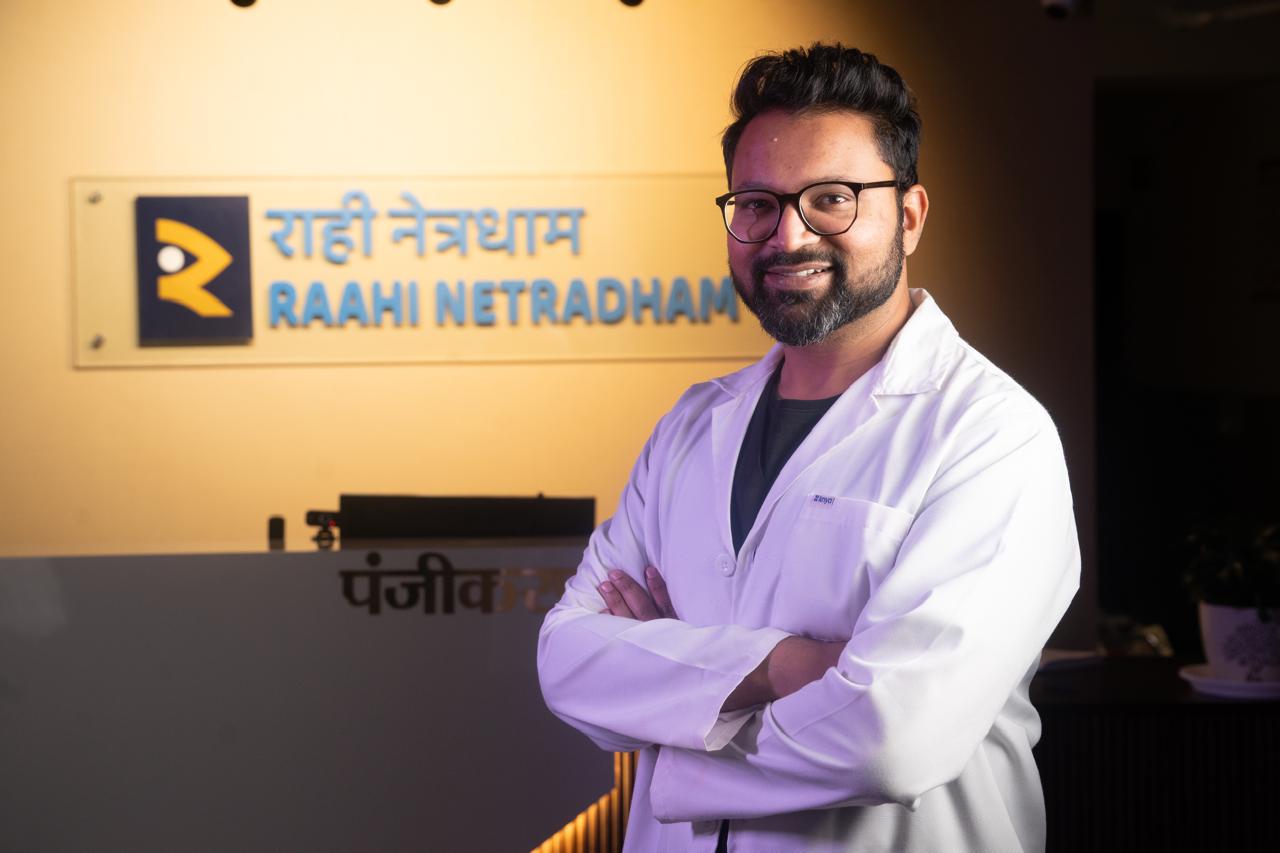
Dr. Chintan Desai
Vitreoretina · Cataract · Neuro-Ophthalmic
MBBS, DNB, FICO, and FVRSSN
View Full Profile →
Dr. Isha Agarwalla
Oculoplasty & Cataract Specialist
MBBS, MS (Ophthalmology), FMRF (Retina)
View Full Profile →